

Elevator manufacturing thermal protection case: Nanoporous insulation material safeguards the safety of lithium battery energy storage
With the rapid development of high-rise buildings and industrial plants in cities, elevators, as the core vertical transportation equipment, have continuously improved their requirements for ride comfort, operational safety, and adaptability to working conditions. Whether it is passenger elevators, fire elevators in civil buildings, or industrial high-temperature elevators in metallurgical and chemical scenes, insulation protection is a key factor affecting equipment performance and user experience. The nano porous thermal insulation material mainly made of nano silica provides a lightweight and high-performance thermal protection solution for the elevator manufacturing field due to its lightweight, high-efficiency, fire-resistant and temperature resistant characteristics.
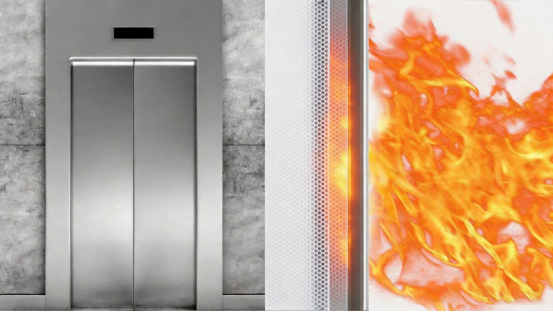
In elevator design and application, thermal protection has long faced multiple practical pain points:
1. Difficulty balancing comfort and energy consumption
The elevator shaft is vertically connected, with a significant temperature difference between winter and summer. In summer, the shaft accumulates heat, causing the car temperature to be higher, while in winter, heat loss is faster; Traditional insulation materials have a large thickness and low insulation efficiency, which not only occupies the interior space of the elevator car, but also makes it difficult to effectively reduce air conditioning energy consumption.
2. Fire elevators have strict fire resistance requirements
The fire elevator is the core rescue passage in fire scenarios and needs to maintain a certain period of safe operation capability in high-temperature fire situations; Ordinary insulation materials have insufficient fire resistance rating, are prone to deformation and failure at high temperatures, and release toxic smoke, which cannot meet the requirements of fire resistance and insulation standards.
3. Difficulty in protecting against special working conditions
Industrial elevators in high-temperature factories such as metallurgy, forging, and chemical engineering are exposed to high temperatures for a long time. The shaft and car are continuously heated, which can cause accelerated aging of electrical components and control system failures. Traditional materials are difficult to achieve efficient insulation in limited spaces.
4. Strict space and load restrictions
Elevators have clear constraints on the self weight and internal space of the car. Thick insulation materials will increase the load on the traction system, compress the passenger space, and contradict the design direction of lightweight and large space elevators.
Silicon dioxide based nanoporous insulation material
In response to the diverse insulation needs of elevator manufacturing, we use nano porous insulation materials with high-purity nano silica as the core material to provide customized thermal protection solutions for different parts of the elevator
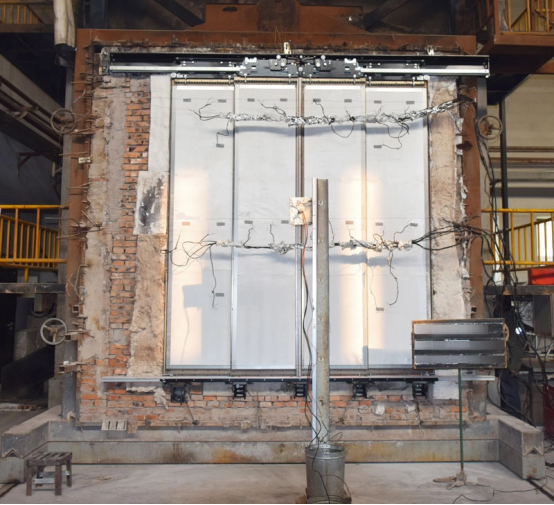
·Full enclosure insulation of the elevator car: ultra-thin insulation panels are laid on the walls, roof, and bottom of the elevator car to construct an overall insulation layer for the elevator car, blocking heat exchange between the shaft and the elevator car and stabilizing the internal temperature of the elevator car;
·Fire resistant protection for fire elevators: As the core insulation layer of fire partitions for fire elevator cars and shafts, it blocks the intrusion of high-temperature smoke and heat in fire scenarios, prolongs the emergency operation time of elevators, and supports personnel evacuation and fire rescue;
·Insulation of machine room/control cabinet: Install insulation materials inside the elevator machine room and control cabinet to isolate the impact of high temperature in the shaft or environmental heat on the electrical control system, and reduce the high temperature failure rate of components;
·Special protection for industrial high-temperature elevators: For elevators in high-temperature factory areas, the insulation layer between the car and the shaft is strengthened to resist external high-temperature invasion and ensure stable operation of the elevator under high-temperature conditions
Core advantages of materials
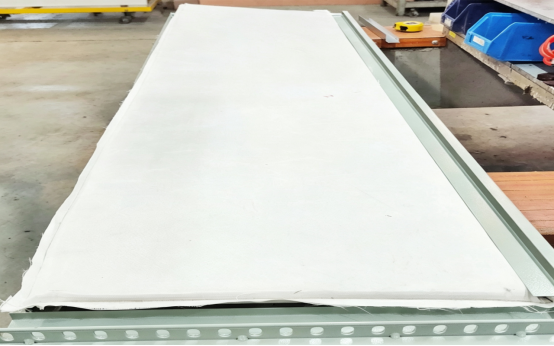
Ultra thin insulation can save space, reduce weight, and adapt to lightweight design; Meets Class A non combustible standards, high temperature resistance and no toxic smoke, enhancing fire safety; Can effectively block heat transfer in the wellbore, maintain constant temperature and energy saving, and optimize the riding experience; Shock resistance and aging resistance, service life matching with the whole machine, low maintenance cost; Support size customization, easy installation, and adaptability to various elevator structures.
Application Effectiveness
Through the systematic application of nano porous insulation materials, the comprehensive performance of elevator products has been comprehensively upgraded
*The temperature stability of civil passenger elevators has been significantly improved, air conditioning energy consumption has been greatly reduced, and ride comfort has been significantly improved. At the same time, lightweight material design helps to increase elevator space utilization;
*The fire resistance and insulation performance of the fire elevator meets the relevant regulatory requirements, effectively extending the safe operation time in fire scenarios, and strengthening the building's fire protection capabilities;
*The working environment temperature of electrical components in high-temperature industrial elevators has significantly decreased, and the equipment failure rate and aging speed have significantly decreased. The operational stability and service life of elevators under high-temperature conditions have been greatly improved.
Tel

Contact Us

official account
Copyright © WH Thermal Technology(Shanghai) Co., Ltd. All rights reserved


